Wednesday, 3 June 2015

Hot Ideas for Fireplace Remodeling


Remodeling your home is always a popular idea. You get the look or functions you want without having to buy a new home. Fireplace remodeling is a good idea too. Many homes feature old versions that can really drag down the style of the rest of the room it’s in. Plus, by remodeling your fireplace, you can get more from its functionality. Before you take on such a big project, though, consider the following ideas to get the best finished result.

Replace the Materials
One of the easiest ways to get more from your fireplace is to simply give it a facelift. As we mentioned, many homes feature the old wood-burning variety that may have a truly outlandish exterior. Remember lava rocks? No matter what you do to the rest of your room, a fireplace covered in lava rocks isn’t going to fool anybody.
However, it’s a fairly affordable operation to remove whatever the current material is and replace it with something like marble, stone or tile. These days even a cheap option like concrete can be made to look amazing. Best of all, you don’t need to actually alter the operation of your current fireplace.
Enhance What You Already Have
Fireplace remodeling sometimes means addressing the area that surrounds it. Maybe the immediate exterior is fine, but it’s otherwise just a hole in the wall for fire to go. Consider adding a mantle if you don’t have one. An expansive molding will also draw more positive attention to your fireplace without demanding a grueling project or large investment. Columns are an especially good look and will do plenty, even if you never touch the fireplace itself.

Convert to a Newer Version
No discussion about fireplace remodeling would be complete without mentioning your options for converting an older option. If you’re still stacking wood and adding kindling to use your fireplace, it’s probably safe to say it’s been a while since you’ve built a fire. This is an almost archaic operation compared to our high-tech lives these days. Plus, your hands, clothes, and surrounding area can need cleaning when it’s all done.
Instead, consider modern gas-burning options. Your choices include:
·         An affordable option like a gas log kit for less than $1,000.
·         For a bit more, a vent-free option will give you the same look and feel without having to worry about losing heat to a damper.
·         If you have the budget for it, a gas fireplace insert is the best option. Your fireplace remodeling project will need about $3,000 for it, but you’ll get the most efficient heating option and can find them in just about any style you want.

Consider Your Overall Costs
While we’re on the subject of your fireplace remodeling budget, it’s worth considering what you’ll spend on the finished product. As you have probably learned, it’s easy to get carried away with all the options out there. You’ll have no problem dropping thousands of dollars into remodeling your fireplace, which could actually be a real issue.
Generally, conventional wisdom is that you shouldn’t spend more than 1% of your house’s total cost, once the project is complete. This number should still give you plenty of options, plus it ensures a good return on your investment if you ever sell.

Keep the Theme Consistant


Also, don’t get so carried away with your Chim-A-Lator Fireplace Dampers  options that you forget about the rest of your home. A mosaic tile border may look great, but if the rest of your home has a cottage theme to it, that fireplace is going to burn your eyes long before you ever start using it. Most people don’t base the rest of their home’s style around the fireplace they choose either. No matter what the theme of your house is, you should still have plenty to work with, stylistically.
Furthermore, if you are considering selling in the near future, a taste-neutral look is really best. Potential buyers may not be as fond of fireplace remodeling as you are, after all. So even if it matches the rest of your home’s style, keeping a natural look will ensure you don’t lose a buyer because they don’t want the headache of undoing your handiwork.
Remodeling your fireplace can do a lot for the room and your home, in general. However, be sure to consider the above ideas before you begin or the otherwise great feature can burn a hole in your pocket and leave your home worse off in the process.
Source : Click here

Tuesday, 26 May 2015

What You Should Look For In Hy-C Chimney Caps


For this article, we’ll discuss what you need to look for when on the market for a new or replacement chimney cap.  First, we’ll briefly go over the reasons why it is important to have a chimney cap:

·         Why Chimney Caps are Important

- Chimney Caps are important because they keep rain water from coming down into your chimney.  This is in turn important because rain water can damage the inside of your chimney, such as the liners and the dampers.  They can also soak through - producing mold that can get into other parts to the chimney. 

-          Chimney Caps are also important to keep animals from setting up shop in your chimney.  Birds, squirrelsand raccoons don’t belong in your chimney and can cause damage, such as producing flies or building a nest. Chimney Caps can also prevent other outside elements such as dirt, leaves or branches from clogging up in your chimney. 

-          Chimney Caps also prevent wind downdrafts.  As your fireplace produces smoke, it’s easy for the outside wind to push the smoke back through the fireplace and back into your home.  The chimney cap will greatly impede this, and prevent as much smoke as possible from entering your home. 

-          A chimney cap will prevent cracking sparks from traveling outside.  All it takes is one spark to get outside, land in the right place with the appropriate conditions, and it can start a fire on a tree or even on your house.  In this regard, a chimney cap is a vital safety protector.  
 

·         What to Look For in a Chimney Cap

-          You will find literally hundreds of different kinds of chimney cleaning tools of different sizes, materials, and shapes.  Look for a cap that is an additional three inches wide and three inches long than the top of your chimney.  If you are on the market for multi-flue Hy-C Chimney Caps, the height of the chimney cap should be at least five inches above the chimney and the flue.  If it is any lower than that, it can cause a potential draft problem.  However, don’t limit yourself to only a 5-inch screen height.  Many Chimney Capsare up to ten inches in total screen height.  

-          Material wise, look for multi flue Chimney Caps that are made out of stainless steel, and that come with a lifetime warranty.  Also look for caps that come with masonry fasteners.  

Source : click here  

Friday, 22 May 2015

What You Need To Know About Fireplace Dampers

 Why Learning About Fire Dampers is Important

    Fireplaces heat up homes, can add warmth and comfort to any home, and are an attractive amenity to any house. But if you don't know what you're doing with your fireplace, it can become a safety hazard. Too many home fires are started every year just because homeowners are too careless about their fireplaces.

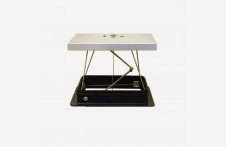
    The most critical part about the fireplace that homeowners should know about is the fireplace damper. The fireplace damper is located in the pipe that runs up and down the inside of the chimney. The damper will either be located at the bottom or the top of the chimney and is made out of metal or another material that can withstand high temperatures. The damper itself will resemble a flap with a hatch to open and close it.
    The fireplace damper controls air flow in and out of the chimney - essentially controlling the heat of the fire. While the fire is lit, the damper should always be open so that smoke can escape out of the home and through the chimney. The more the damper is opened, the more oxygen will reach the fire and will increase the temperature. So while the fireplace damper should always be left open, how much it should be open is a factor.

http://www.lindemannchimneysupply.com/caps-dampers/lindemann-brand-dampers.html

    US Fireplace Dampers also work to keep warm air inside of your home during winter months. Since hot air naturally rises, when the damper is left open the heated air will essentially leave your home...and you'll have to spend extra in heating costs just to keep your home warm when you could have kept it warm using the fireplace. In addition, the fireplace damper can also work to keep outside things from entering your home, such as birds or debris.

http://www.lindemannchimneysupply.com/caps-dampers/lindemann-brand-dampers.html

    Most fireplace dampers are located at the bottom of the chimney but right above the fireplace. Before starting a fire, the interior of the chimney will almost always be cold. Begin starting your fire with a small fire before letting it increase in size and temperature; the cold air moves slower than hot air, and can stop the hot air from moving out of the chimney and result in more smoke filling up the interior of your home. In contrast to this, if the fireplace damper is located at the top of the chimney, you can start up a hot fire immediately since the interior of the chimney will be more in line with room temperatures.

Learn More : Energy Top Fireplace Dampers

Source : Click Here

Friday, 15 May 2015

What You Need to Know About Fireplace Dampers


A fireplace damper is a valve at the opening of a chimney or fireplace that closes and opens the chimney when it is not being used.  Learning about fireplace dampers is important, because if you have any issues with your fireplace such as smoke filing up in the home, you may be able to correct the problem just by learning about how fireplace dampers work.


  •          Why Learning About Fire Dampers is Important


-          Fireplaces heat up homes, can add warmth and comfort to any home, and are an attractive amenity to any house.  But if you don’t know what you’re doing with your fireplace, it can become a safety hazard. Too many home fires are started every year just because homeowners are too careless about their fireplaces. 

-          The most critical part about the fireplace that homeowners should know about is the fireplace damper. The fireplace damper is located in the pipe that runs up and down the inside of the chimney. The damper will either be located at the bottom or the top of the chimney and is made out of metal or another material that can withstand high temperatures. The damper itself will resemble a flap with a hatch to open and close it.  


-          The fireplace damper controls air flow in and out of the chimney - essentially controlling the heat of the fire. While the fire is lit, the damper should always be open so that smoke can escape out of the home and through the chimney. The more the damper is opened, the more oxygen will reach the fire and will increase the temperature. So while the fireplace damper should always be left open, how much it should be open is a factor.

-          Fireplace dampers also work to keep warm air inside of your home during winter months.  Since hot air naturally rises, when the damper is left open the heated air will essentially leave your home…and you’ll have to spend extra in heating costs just to keep your home warm when you could have kept it warm using the fireplace.  In addition, the fireplace damper can also work to keep outside things from entering your home, such as birds or debris. 

-          Most fireplace dampers are located at the bottom of the chimney but right above the fireplace.  Before starting a fire, the interior of the chimney will almost always be cold.  Begin starting your fire with a small fire before letting it increase in size and temperature; the cold air moves slower than hot air, and can stop the hot air from moving out of the chimney and result in more smoke filling up the interior of your home.  In contrast to this, if the fireplace damper is located at the top of the chimney, you can start up a hot fire immediately since the interior of the chimney will be more in line with room temperatures. 


Source : Click Here

Wednesday, 6 May 2015

Repairing and Cleaning Your Chimney


Creosote is a dark colored, combustion residue that can collect on the inside of a chimney. Creosote is that it is very flammable and, because creosote is so flammable, it can cause cracks in the brick, which means that heat can reach other parts of your house. A flammable chimney is one of the leading causes of fires in homes.

            Let’s explore chimney repairs and cleaning in greater detail. 

·         Chimney Cleaning

-          Having your chimney fully cleaned out will cost over one hundred dollars, but a clean sweep won’t just clean out your chimney, it will clean out the fireplace as well.  Your goal with the chimney cleaning will be to have the firebox checked for any damaged bricks and/or mortar, to have the damper checked for cracks and rusting (any that are should immediately be replaced by a professional), and to ensure that the damper fits tightly and moves freely when it is opened. 

-          In addition, if there is any airflow being restricted by debris, it should be removed as soon as possible.  Examples of debris may include broken bricks and flue liners. If there are any vertical cracks inside of the chimney, this means that a flue fire has taken place here before, and it should be handled immediately by a professional.  

-          If there are any signs of creosote concentrations inside of the chimney, they should be removed as well. Chimney cleaning is an essential part to keeping your home well maintained.  However, chimney cleaning is different than chimney repair. If you ever have a professional clean your chimney, they may tell you that your chimney is in need of some repair measures.

·         Chimney Repair

-          Chimney repairs can include installation of a chimney cap, replacing the liner, or even replacing the mortar. Chimney repair is a far more serious matter than chimney cleaning.

-          If your chimney cleaning professional ever tells you that your chimney will be in imminent need of total replacement or some major repairs, you should contact your building official immediately. This is because chimney repair or replacement may require a building permit. The only person who is qualified to repair a chimney is a home improvement contractor.

-          To find out if the contractor is a viable candidate to repair or replace your chimney, they must have a home improvement registration certificate with them and display this to you. You can always contact the Department of Consumer Protection and they will check up on any home improvement contractor. 
-          You will be given a certain amount of time, usually three days, to cancel the job.  This is under home improvement law that requires all home improvement contractors to put a cancellation notice in the contract, giving you time to think about the job before it actually begins.  

Source : Click Here